Trace Evidence
The National Institute of Justice notes that trace evidence is one of the most diverse forensic disciplines because it includes the analysis of hair, fiber, paint, glass, soil, and other particulate matter. It can also include the analysis of botanical material, arson/fire debris, explosives, and/or impression evidence.
By definition, therefore, a trace-evidence examiner will be called upon to analyse a wide variety of evidence that may have been transferred between people, objects or the environment during the commission of a crime and as such will have be proficient in such things as microscopy, spectroscopy, photography, and other analytical instrumentation.
Want To Study Forensics/CSI?

Evidence Gathering Techniques
Essential Reading
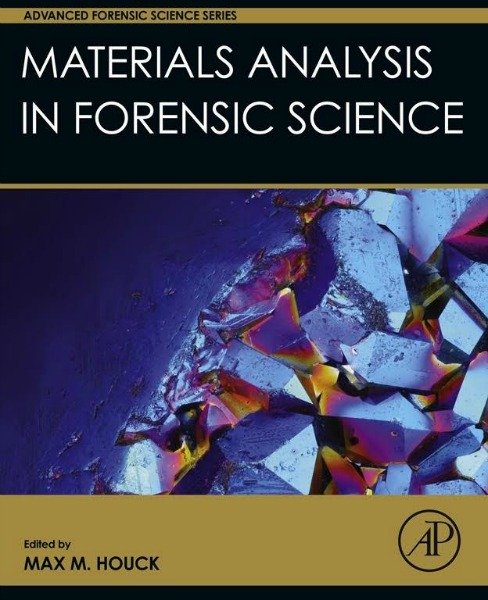
Materials Analysis in Forensic Science will serve as a graduate level text for those studying and teaching materials analysis in forensic science. In addition, it will prove an excellent library reference for forensic practitioners to use in their casework. Coverage includes methods, textiles, explosives, glass, coatings, geo-and bio-materials, and marks and impressions, as well as information on various other materials and professional issues the reader may encounter. Edited by a world-renowned leading forensic expert, the book is a long overdue solution for the forensic science community.
- Provides basic principles of forensic science and an overview of materials analysis.
- Contains information on a wide variety of trace-evidence.
- Covers methods, textiles, explosives, glass, coatings, geo-and bio-materials, and marks and impressions, as well as various other materials.
- Includes a section on professional issues, such as discussions of the crime scene to court process, lab reports, health and safety, and field deployable devices.
- Incorporates effective pedagogy, key terms, review questions, discussion questions, and additional reading suggestions.
See following link for full details.
Materials Analysis in Forensic Science
Recent Articles


-
All About Forensic Science
Nov 12, 24 03:05 AM
A forensic science website designed to help anybody looking for detailed information and resources. -
The Role of Forensic Evidence in Criminal Defense Cases
Sep 05, 24 03:38 AM
 Article exploring five key roles that forensic evidence plays in criminal defense cases
 -
The Evolving Role of Medical Science in Forensic Investigations
Aug 06, 24 03:35 AM
 Insightful article exploring the critical role of medical science in forensic investigations.
New! Comments
Have your say about what you just read! Leave me a comment in the box below.