Forensic Ballistics
The United States army defines ballistics as the branch of applied physics that studies the motion of missiles or projectiles of all types and the conditions that influence that motion; which put simply means the study of firearms and ammunition. When ballistics are examined within a legal context the prefix forensic can then be applied.
A very useful defintion of appeared in a U.S. House Bill back in 2000, which stated that forensic-ballistics is "a comparative analysis of fired bullets and cartridge casings to identify the firearm from which the bullets or cartridge casings were discharged through the identification of the unique characteristics that each firearm imprints on bullets and cartridge casings."
The following video demonstrates how this "comparative analysis" takes place in the real world.
Ohio University Forensic Chemistry Lab
Want To Study Forensics/CSI?

Learn About Forensic Ballistics
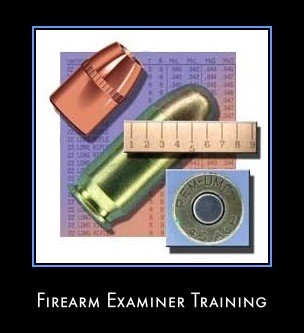
The Firearm Examiner Training website is published by The Research, Development, and Evaluation Agency of the U.S Department of Justice and provides a detailed interactive training program delivered in fourteen modules which cover the following topics areas:
|
|
You can access this outstanding resource for free by Clicking Here
Who Did The Shooting?
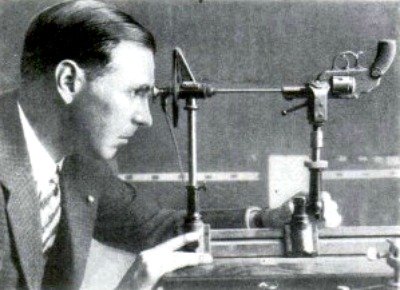
See following link to read a classic article from 1927 showcasing the then new science of forensic ballistics.
Essential Reading
Forensic Ballistics in Court: Interpretation and Presentation of Firearms Evidence is an accessible introduction to firearms and ballistics evidence and how this is analysed and presented as evidence in a court of law.
The book approaches the subject in terms of the realities of case work, opening with a clear and illustrated explanation of the correct nomenclature for various weapon types and their parts. Ammunition is also extensively covered, again with annotated illustrations. Basic external and terminal ballistics, wounding capabilities are likewise covered to give an overview of the subject. A key aspect of the book covers the theory and philosophy behind striation matches and the associated statistics, how positive matches should be peer reviewed and the importance accreditation has on this subject.
Gunshot residue formation and identification and the various methods used in its analysis are reviewed in depth. This includes a critical examination of the pros and cons of each type of examination and the evidential weight which can be applied to each method.
- Accessible and reader-friendly introduction to firearms and ballistics.
- Clarifies the limitations of firearms evidence.
- Extensive use of global case-studies throughout.
- Focus on the interpretation and assessment of the weight of firearms/ballistics evidence presented at court.
- Covers the importance of witness and accused statements and their interpretation in relation to the investigation under review.
- Includes coverage of gunshot residue collection, examination and interpretation and the potential for contamination of GSR samples.
- Includes numerous real life case studies that the author has dealt with over the past 45 years.
- Takes an applied approach to the subject.
See following link for full details.
Forensic Ballistics in Court: Interpretation and Presentation of Firearms Evidence
Recent Articles


-
All About Forensic Science
Nov 12, 24 03:05 AM
A forensic science website designed to help anybody looking for detailed information and resources. -
The Role of Forensic Evidence in Criminal Defense Cases
Sep 05, 24 03:38 AM
 Article exploring five key roles that forensic evidence plays in criminal defense cases
 -
The Evolving Role of Medical Science in Forensic Investigations
Aug 06, 24 03:35 AM
 Insightful article exploring the critical role of medical science in forensic investigations.
New! Comments
Have your say about what you just read! Leave me a comment in the box below.