Forensic Entomology
According to the American Board of Forensic-Entomology, Forensic-Entomology, or Medicocriminal Entomology, is the science of using insect evidence to uncover circumstances of interest to the law, often related to a crime. As an example, they point to time of death, which can be established using insect evidence gathered from and around a corpse.
Want To Study Forensics/CSI?

Is Forensic Entomology For You?
When Popular Science Magazine published it’s 'bottom-10-list' of the worst jobs in science - an irreverent look at the more interesting side of scientific employment, described as a salute to the men and women who do what no salary can adequately reward; you might be interested to know that forensic entomology made the list! Described as "solving murders by studying maggots," insight into this particular scientific vocation was provided by leading forensic entomologist Neal Haskell.
|
"One day a local detective called me who knew I’d majored in entomology in college and said, 'Hey, Neal, we got a body at the morgue with insects on it. You wanna give it a shot?' The corpse turned out to be a guy I used to have breakfast with, and there were maggots in his teeth. Then I found some in his eyes, and I thought, "This is what I want to do. This is just way too cool." |
|
Forensic Entomology in Action
The Steven Truscott case is among the most high profile and controversial in Canadian legal history. On the 9th June 1959 14 year old Steven Truscott went on a bike ride with his 12 year old classmate Lynne Harper. Two days later, Lynne Harper is found dead, she had been raped and strangled.
Within two days Steven Truscott was arrested and charged with the murder of Lynne Harper. On the 8th December 1959 Truscott was found guilty and sentenced to death. The death penalty was later commuted to life imprisonment. 48 years later the Ontario Court of Appeal overturns the conviction, declaring a miscarriage of justice that must be quashed
Central to this decision was the forensic evidence, in particular the entomological evidence relating to Lynne Harper's time of death. Among those to testify was entomology professor Richard Merritt whose specialty was insect growth rate based on temperature. According to Merrit the time of death suggested in the original trial was wrong and that Truscott could not have killed Lynne Harper because he was at home when she died.
Essential Reading
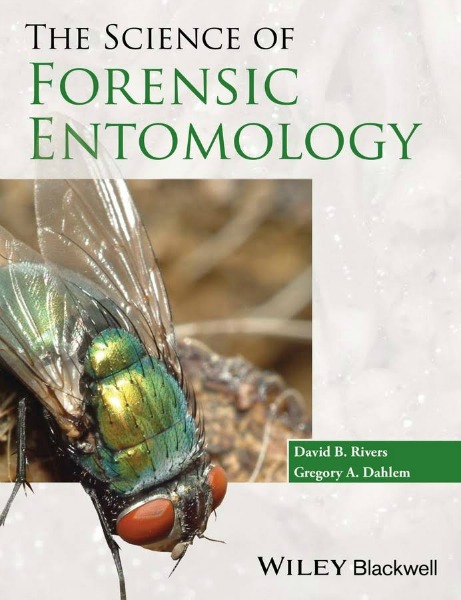
The Science of Forensic Entomology builds a foundation of biological and entomological knowledge that equips the student to be able to understand and resolve questions concerning the presence of specific insects at a crime scene, in which the answers require deductive reasoning, seasoned observation, reconstruction and experimentation—features required of all disciplines that have hypothesis testing at its core. Each chapter addresses topics that delve into the underlying biological principles and concepts relevant to the insect biology that forms the bases for using insects in matters of legal importance.
The book is more than an introduction to forensic-entomology as it offers in depth coverage of non-traditional topics, including the biology of maggot masses, temperature tolerances of necrophagous insects; chemical attraction and communication; reproductive strategies of necrophagous flies; archaeoentomology, and use of insects in modern warfare (terrorism). As such it will enable advanced undergraduate and postgraduate students the opportunity to gain a sound knowledge of the principles, concepts and methodologies necessary to use insects and other arthropods in a wide range of legal matters.
See following link for full details.
The Science of Forensic Entomology
Recent Articles


-
All About Forensic Science
Nov 12, 24 03:05 AM
A forensic science website designed to help anybody looking for detailed information and resources. -
The Role of Forensic Evidence in Criminal Defense Cases
Sep 05, 24 03:38 AM
 Article exploring five key roles that forensic evidence plays in criminal defense cases
 -
The Evolving Role of Medical Science in Forensic Investigations
Aug 06, 24 03:35 AM
 Insightful article exploring the critical role of medical science in forensic investigations.
New! Comments
Have your say about what you just read! Leave me a comment in the box below.