Forensic Linguistics
According to Dr. Carole E. Chaski, one of the leading experts in the field, forensic linguistics applies the theories, constructs and analytical methods of linguistics to questions which arise in civil, criminal and security investigations and adjudication.
Want To Study Forensics/CSI?

Dr. Chaski notes that an informed understanding of forensic-linguistics requires familiarity with the broader application of linguistics as a social science. This is because virtually every linguistic nuance has been examined within a legal context. These include:
- Phonetics & Phonology - the system of sounds in human language.
- Morphology - the minimal units of sounds which convey meanings.
- Syntax - the ways in which words can combine into phrases.
- Semantics & Syntax - word, phrasal and sentential meanings.
- Pragmatics - language use in conversation and other forms of discourse.
- Language Change - the ways in which language evolves over time.
- Psycholinguistics - how the human cognitive system processes language.
- Neurolinguistics - human neuroanatomy and neuronal functioning.
- Sociolinguistics - identification of linguistic patterns constrained by social, class, racial and gender boundaries.
- Dialectology - identification of dialects related to regional boundaries.
- Computational Linguistics - tools through which computers can be used to perform linguistic tasks.
|
The primary difference between forensic-linguistics and non-linguist methods is the scientific approach. In forensic linguistics, the scientific method requires hypothesis testing and a litigation-independent testing of the method for its accuracy. Further, these tests are performed with robust controls regarding data quantity, data sources and analytical objectivity. |
|
Expert in Focus: Dr. Carole E. Chaski.
Computational linguist Carole Chaski, PhD is CEO/President of ALIAS Technology LLC and director of the Institute for Linguistic Evidence. Dr. Chaski provides assistance in cases involving:
- Ransom notes in kidnapping cases.
- Threatening letters.
- Anonymous letters.
- Suicide notes.
- Patent disputes.
- Interrogation/interview statements.
- Missing person.
- Employment disputes.
- Examination fraud.
- Plagiarism.
Dr. Chaski has developed software for forensic-linguistics called ALIAS (Automated Linguistic Identification and Assessment System) and validated the implemented methods independent of any litigation, (some of which have already passed the scrutiny of Daubert and Frye hearings for admissible evidence).
The Groundbreaking Science of Forensic Linguistics
Excellent talk by Dr. Rob Leonard, an expert in the application of linguistic theory to the analysis of language evidence.
Essential Reading
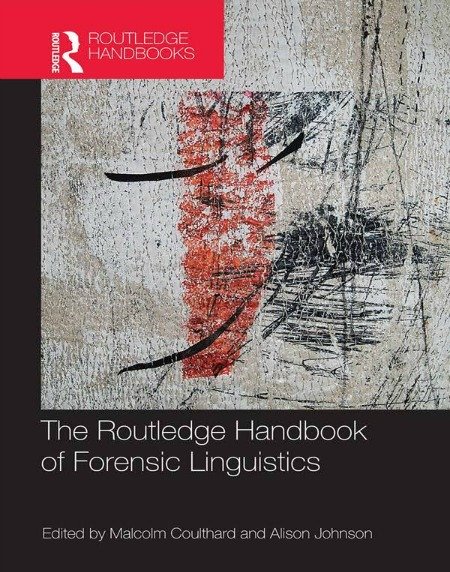
The Routledge Handbook of Forensic-Linguistics provides a unique work of reference to the leading ideas, debates, topics, approaches and methodologies in Forensic Linguistics.
Forensic-Linguistics is the study of language and the law, covering topics from legal language and courtroom discourse to plagiarism. It also concerns the applied (forensic) linguist who is involved in providing evidence, as an expert, for the defence and prosecution, in areas as diverse as blackmail, trademarks and warning labels.
The Routledge Handbook of Forensic-Linguistics includes a comprehensive introduction to the field written by the editors and a collection of thirty-seven original chapters written by the world’s leading academics and professionals, both established and up-and-coming, designed to equip a new generation of students and researchers to carry out forensic linguistic research and analysis.
See following link for full details.
The Routledge Handbook of Forensic-Linguistics
Recent Articles


-
All About Forensic Science
Nov 12, 24 03:05 AM
A forensic science website designed to help anybody looking for detailed information and resources. -
The Role of Forensic Evidence in Criminal Defense Cases
Sep 05, 24 03:38 AM
 Article exploring five key roles that forensic evidence plays in criminal defense cases
 -
The Evolving Role of Medical Science in Forensic Investigations
Aug 06, 24 03:35 AM
 Insightful article exploring the critical role of medical science in forensic investigations.
New! Comments
Have your say about what you just read! Leave me a comment in the box below.