Forensic Art
According to renowned expert in the field Karen Taylor "forensic art is any art that aids in the identification, apprehension, or conviction of criminal offenders, or that aids in the location of victims or identification of unknown deceased persons."
Want To Study Forensics/CSI?

Types of Forensic Art
Composite Imagery: Image characteristics of the human face, including images drawn by hand; computer generated imagery and or "identi-KIT" style composites.
Image Modification/Identification: Process by which photographic images are manipulated and enhanced, e.g., age progression drawings.
Demonstrative Evidence: Includes visual information used in court.
Reconstructive/Postmortem Drawings: Relates to artist methods employed to help identify human remains. Typically includes 2D and 3D facial reconstructions, either in the form of a sketch or computer generated image.
FBI Forensic-Artist
Lisa Bailey, a forensic-artist at the FBI Laboratory in Quantico, Virginia, creates facial approximations of unidentified individuals using models of their skulls and an anthropologist reports.
Video Transcript
We need the right person to see this image pretty much at the right time. All we need is that one person to see it.
My name is Lisa Bailey. I’m a visual information specialist at the FBI Laboratory. And I work on facial approximations of unidentified remains.
|
When the evidence comes in it first goes to the anthropologist because as an artist I can't do anything until I have the age, sex, stature, and ancestry of the person that I’m going to be depicting. |
|
I read the anthropologist’s report and I sit and I just examine the skull. I’m just looking at it for any other clues, like one cheek might be a little more recessed than the other. I’m just looking and basically seeing what the anthropologist is seeing before I start sculpting.
You need to be an artist to be a forensic artist. You have to have technical skills. You have to be able to draw and to sculpt. But you have to know when to pull back and not put too much in that is unknown. For with skulls, there are things we know, things we don't know. So you can't go too far and put in things that are absolutely not known because that will detract form the case.
There are some that will just never be identified. That’s one of the things that I’ve had to reconcile with myself in doing this job is that I can do the best I can, there’s only so much I can do. It’s just they’re not all going to be identified. But some of them can.
And if somebody’s looking, you know, all they need to do is make that call.
Just seeing that one image could be, could be the one thing that makes somebody take a second look. And that’s all we need is for somebody... is to see it and to make the phone call.
Free Online Course
Learn about the forensic technique of facial reconstruction from the experts involved in a real crime case.
On this course, Dr. Katherine Linehan from The University of Sheffield will introduce you to the skills necessary for conducting a facial reconstruction; from interpreting the features of a skull to understanding the anatomy of the face.
This course is suitable for anyone interested in how forensic anatomy and facial reconstruction can assist police investigations. No prior qualifications in forensic science or other disciplines are required.
See following link for full details.
Essential Reading
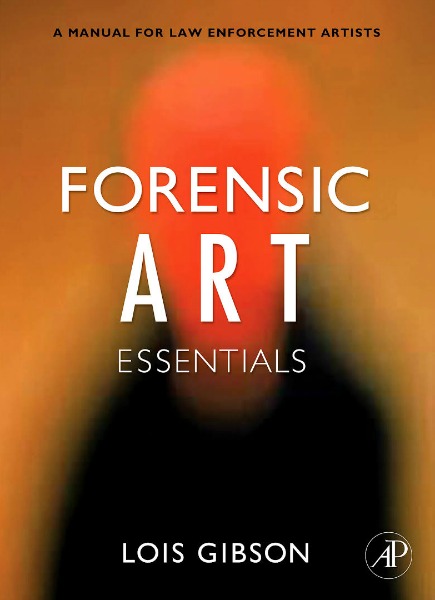
The demand for forensic-art usage in investigations is rapidly expanding due to media attention. Despite this fact, to date no book thoroughly explains how to sketch a suspect's face from a witness’ memory. This book teaches artists to extract information from a witness or victim about a face they have seen, and produce an image good enough to lead detectives to the criminal being described. After reading this book, anyone with adequate drawing skills will be able to learn the tools necessary to develop his or her skills as a forensic-artist. Instruction focuses on an explanation of techniques for various scenarios and includes the use of case studies of special situations and how they should be handled.
Additionally, Forensic-Art Essentials covers skull reconstructions of unidentified murder victims and age progressions to aid in the apprehension of known fugitives. The book also provides step-by-step illustrations of how to reconstruct a face from a skull, and offers solutions to a multitude of common problems that occur in the field. With 500 full-color illustrations, this book is an essential tool for any forensic-artist.
See following link for full details.
Forensic-Art Essentials: A Manual for Law Enforcement Artists
Recent Articles


-
The Role of Forensic Evidence in Car Accident Investigations
Jan 30, 24 07:22 AM
 Insightful article on the role of forensic evidence in car accident investigations.
 -
The Role of Forensic Science in Personal Injury Cases
Oct 20, 23 03:56 AM
 Insightful article on the role of forensic science in personal injury cases.
 -
All About Forensic Science
Aug 16, 23 09:53 AM
A forensic science website designed to help anybody looking for detailed information and resources.
New! Comments
Have your say about what you just read! Leave me a comment in the box below.