Home
Introduction
What is F. Sci?
Criminalistics
Forensic DNA
For. Pathology
For. Toxicology
Computer Foren's
For. Anthropology
For. Odontology
For. Linguistics
For. Entomology
Forensic Psych
F.Sci Career Info
F.Sci Degrees (US)
F.Sci Degrees (UK)
CSI Degree Info
Online Crim Justice
The CSI Effect
Quality F.Sci Links
F.Sci Conferences
F.S Search Engine
Forensic Sci News
Our Forensic Blog
More Great Blogs
Famous Forensics
Notice Board
Science For Kids
Free Student Stuff
Share This Website
Contact Us
Keep Up To Date
F.Sci Amazon Store
Free Resources
Guestbook
Book of the Month
CSI Miami Tagline
It's Good To Talk
Media Watch
Squidoo
Murder Mystery
Escapism Zone
F.Sci Formula
Advertise With Us
F.Science (India)
Forensic Sci 2.0
Forensic Q & A
Forensic MyPlace

XML RSS
What is this?
Add to My Yahoo!
Add to My MSN
Add to Google


Famous Forensic Cases


Forensic science is a fascinating topic in its own right but when its employed, discussed and debated in relation to celebrities, high profile trials and key historical figures it becomes utterly compelling.
This page was inspired by a number of our forensic science blog entries, the details of which are included here. The aim of the page is to highlight some of the most famous cases where forensics has been involved and provide quality links to additional information should you wish to find out more.


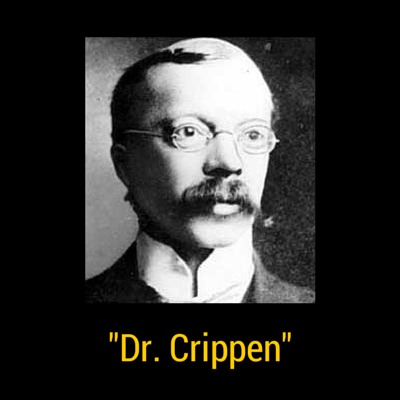
Dr Hawley Harvey Crippen


Forensic science is shedding new light on one of the most notorious murder cases in British history. In 1910 American born Dr Hawley Harvey Crippen was found guilty and subsequently hanged for the murder of his wife Cora. Crippen is said to have poisoned Cora, dismembered her body and then buried her remains in the cellar of their London home.

However, in a remarkable twist to a case that has spawned intrigue and interest for almost a century a team of forensic scientists from Michigan State University believes that modern forensic science proves that the remains buried in Crippen’s cellar could not be those of his wife.

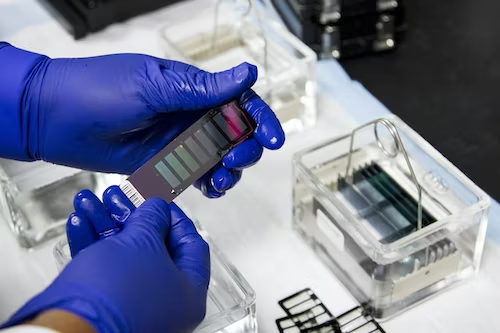
The forensic team behind this amazing finding was David Foran, a forensic biologist and director of MSU’s forensic science program, forensic toxicologist John Harris Trestrail and genealogist Beth Wills. The basis for their claim arose from DNA analysis conducted on a microscope slide sample that was presented as evidence during Crippen's trial. During the trial forensic pathologist Bernard Spilsbury testified that the sample revealed an abdominal scar consistent with Cora Crippen's medical history, testimony that helped convince the jury that the remains were those of Cora.

The simple premiss underpinning extremely complex forensic DNA analysis is that if Dr Hawley Harvey Crippen murdered his wife and disposed of remains, then those remains would share specific DNA characteristics with Cora Crippen’s living relatives. However, they do not! As David Foran notes "We took a lot of precautions when doing this testing...We just didn’t stop. We went back and started from scratch and tested it again. The DNA in the sample is different from the known relatives of Cora Crippen."

Which of course begs the question, whose remains were buried in the cellar?

If you would like a more detailed account of the forensic science surrounding the case, Michigan State University has a website page dedicated to the forensic investigation. From this page you can also listen to audio clips featuring members of the forensic team and read a 32 page Dr Crippen murder casebook.

Click Here to visit the Michigan State University Dr Crippen forensic investigation website page.

Did you know?

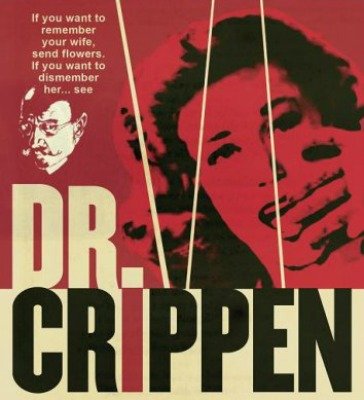
Donald Pleasence played the lead role in the 1962 film Dr Crippen. Perhaps forensic science is going to be able to answer the question posed on the poster used to promote the film.


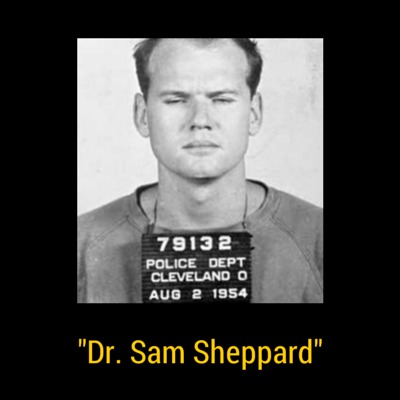
The Dr. Sam Sheppard Murder Case


The death of Marilyn Sheppard in 1954 remains one of the most infamous unsolved murders in the USA. The subsequent arrest of her husband, Dr. Sam Sheppard resulted in what became known as the "Trial of the Century" in 1954 followed by the "Re-Trial of the Century" in 1966.

In 1999 the TV science series NOVA aired a program on the Sheppard case which re-examined the forensic evidence surrounding the case. Nova also produced an excellent supporting website entitled "The Killer's Trail". Included on the website are:

  • Chronology of a Murder
  • A riveting, step-by-step account of the key events in the Sheppard murder case, assembled by Sheppard's son and attorney-journalist Cynthia Cooper.

  • Science in the Courtroom
  • A prominent Superior Court Judge explains why all judges should take a laboratory class on the fundamentals of DNA research.

  • Create a DNA Fingerprint
  • Assemble a DNA fingerprint online and use it to identify the culprit in a hypothetical crime.

    Click Here to visit the website.


    Additional Information

    Click Here to access a collection of primary documents, essays, maps, photos, transcript excerpts and other materials relating to the 1954 murder of Marilyn Sheppard and the trials (1954 trial & 1966 retrial) of Dr. Sam Sheppard.

    Reporter Tim Estiloz explores the Dr. Sam Sheppard Murder Case

    Did you know that the Dr. Sam Sheppard Murder Case inspired "The Fugitive" TV series and film.

    Opening credits of The Fugitive TV series from 1963


    The Perfect Forensic Science Gift:


    The Phil Spector Murder Trial


    It was clear from the opening statements that forensic science will be centre stage during the Phil Spector murder trial. Defence attorney Linda Kenney-Baden claimed that their star witness would be science, stating "We have one unimpeachable witness who has no motive to lie, no memory problems, no language problems, and that witness is science," Kenney-Baden argued that DNA would prove that Lana Clarkson loaded the weapon and shot herself, that Spector was not standing close enough to shoot, Spector's DNA was not on the gun and that his clothing bore no trace evidence to prove guilt.

    I think it's fair to suggest that we can expect several expert witness showdowns during the course of the trial. Watch this space

    Background to the Phil Spector Murder Trial (Court TV)


    Joan of Arc


    New forensic tests have shown that bones believed to be the remains of French icon and heroine Joan of Arc are in fact Egyptian in origin. Forensic scientist Dr Philippe Charlier says the remains include a charred human rib from an Egyptian mummy and the thigh bone of a cat.

    Click here to watch a BBC news report on the story.

    For more background details and information on the forensic testing carried out Click Here to read an article by science editor Steve Connor.

    Trailer to the movie Messenger: 'The Story of Joan of Arc'


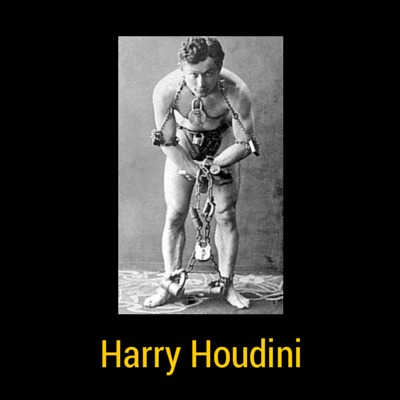
    Harry Houdini


    Escapologist Harry Houdini died on Halloween 1926. The official cause of death was recorded as a burst appendix, said to have resulted from a punch in the stomach (Houdini regularly challenged people to punch him in the stomach as a show of strength).

    No autopsy was conducted and his family suspect he was in fact murdered by spiritualists after debunking claims that they could contact the dead. In order to try and solve this 80 year old mystery Houndini's body will be exhumed and examined by Forensic experts.

    A team of forensic pathologists, anthropologists, toxicologists and radiologists has been assembled under the leadership of forensic specialist James Starrs, who examined the bodies of outlaw Jesse James and the Boston Strangler Albert De Salvo. Starrs is quoted as saying that "Everything will be thoroughly analyzed, We'll examine his hairs, his fingernails, any bone fractures."

    We await the results and findings with interest.

    Fascinating News Report on the Houdini Murder Claims


    Ted Bundy


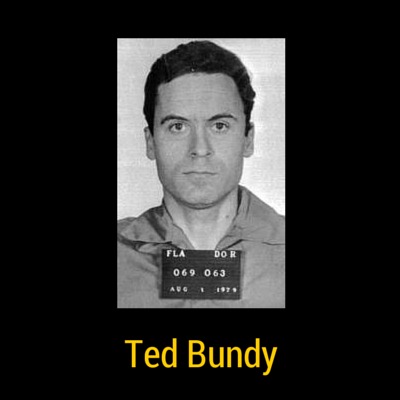
    One of the most notorious serial killers of all time, Ted Bundy was officially linked to the murder of 36 victims, although many expert commentators believe he probably killed at least 100 women. It is widely acknowledged that the expert testimony by forensic odontologist (dentist) Dr. Richard Souviron in relation to the bite mark found on murder victim Lisa Levy; was crucial in securing the conviction and subsequent execution of Bundy.

    Click Here to read Ted Bundy's Wikipedia page.

    For a detailed account of the bite mark analysis in the Bundy trail Click Here to read an article by Katherine Steck-Flynn.

    Click Here to read The "Most Famous Bitemark Case of the Twentieth Century" by Dr Mike Bowers.


    Napoleon Bonaparte
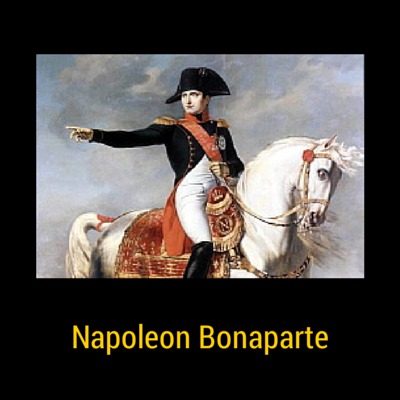

    According to the official records, Napoleon Bonaparte died of stomach cancer on the 5th May 1821. However, many historians claim that forensic evidence shows that he was actually the the victim of arsenic poisoning.

    Ben Weider, Founder & President of the The International Napoleonic Society has written widely on the topic. You can read The Assassination of Napoleon by Ben Weider by clicking Here

    Extract from the PBS Empires 'Napoleon' Documentary


    A Great Forensic Read


    Hidden Evidence: Forty true crimes and how forensic science helped solve them

    Book Description

    Hidden Evidence takes you to the scenes of 40 infamous crimes and into the heart of the forensic investigations. These are the true crime shockers that have grabbed headlines and aroused public passions. David Owen explains the scientific procedures that helped crack every one of these cases from the gathering of elusive physical clues to the examination of weapons and bodies, to the use of sophisticated scientific analysis.

    Threaded throughout the book is the history of forensic science and the technologies that support it, including: fingerprinting, autopsies, handwriting analysis, ballistics, hair sampling, blood typing, DNA testing, dental records, gas chromatography, mass spectrometry, compound and electron microscopes, and toxicology.

    The high-profile cases David Owen used to illustrate forensic developments are from as early as 1775, when Paul Revere used dentures to identify a slain soldier, to the latest developments in the Oklahoma bombing. Most will be familiar to readers, such as: The Lindbergh Kidnapping, Pan Am Flight 103, The Kennedy Investigation, The Hitler Diaries, Wayne Williams, Ted Bundy, Jeffrey MacDonald, Dr. Josef Mengele, Robert Maxwell's suicide, Tsar Nicholas II, and The World Trade Center bombing.

    David Owen presents the facts, steering clear of speculation. Comprehensive in scope, thoroughly researched and expertly compiled, Hidden Evidence is, in the words of former Los Angeles County Coroner Thomas T. Noguchi, "a fascinating book ... [and] an excellent mini-encyclopedia of widely discussed, high-profile cases." See following link for more details.

    Hidden Evidence: 40 True Crimes and How Forensic Science Helped Solve Them

    Visitors From The UK Click Here


    Minds on Trial: Great Cases in Law and Psychology

    Editorial Review

    In recent years, the public has become increasingly fascinated with the criminal mind. Television series centered on courtroom trials, criminal investigations, and forensic psychology are more popular than ever. More and more people are interested in the American system of justice and the individuals who experience it firsthand.

    Minds on Trial: Great Cases in Law and Psychology gives you an inside view of 20 of the highest profile legal cases of the last 50 years. Drs. Ewing and McCann take you "behind the scenes" of each of these cases, some involving celebrities like Woody Allen, Mike Tyson, and Patty Hearst, and explain the impact they had on the fields of psychology and the law. Many of the cases in this book, whether involving a celebrity client or an ordinary person in an extraordinary circumstance, were determined in part by the expert testimony of a psychologist or other mental health professional.

    Psychology has always played a vital role in so many aspects of the American legal system, and these fascinating trials offer insight into many intriguing psychological issues. In addition to expert testimony, some of the issues discussed in this entertaining and educational book include the insanity defense, brainwashing, criminal profiling, capital punishment, child custody, juvenile delinquency, and false confessions.

    In Minds on Trial, the authors skillfully convey the psychological and legal drama of each case, while providing important and fresh professional insights. Mental health and legal professionals, as well as others with an interest in psychology and the law will have a hard time putting this scholarly, yet readable book down.

    See following link for more details:

    Minds on Trial: Great Cases in Law and Psychology

    Visitors From The UK Click Here


    Share This Page:

    If you think your family, friends, teachers, fellow students etc would be interested in taking a look at this page, there are a number of ways to let them know about them:

    1. The Tell A Friend Box

    Click on the link below. In the Tell A Friend box that appears just enter your name, e-mail address, your friends e-mail address(es) and any comments you'd like to add. Then just hit the Tell A Friend button. Your friend(s) will be sent your message along with a direct link to this page.


    2. Social Bookmarking

    You can also share this page via your favourite bookmarking location.


    Looking For Something In Particular? Try Google Search

    Google


    Back To Top Of The Page

    Go From Famous Forensics Back To The Home Page


    footer for famous forensic cases page