Forensic Odontology Expert Q & A
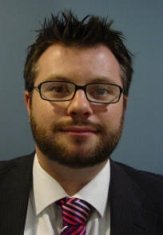
Forensic odontology expert, Dr Iain Pretty is Professor of Public Health Dentistry at the University of Manchester, School of Dentistry. The author of over 100 articles in leading journals, Dr Pretty's research interests include the evidence base supporting the use of bitemark analyses in court proceedings.
Want To Study Forensics/CSI?

What is forensic odontology?
Forensic odontology, forensic dentistry and legal dentistry - all terms are synonymous and a good definition is that it is that portion of dentistry that interfaces with law at criminal and civil levels. In essence, any part of dentistry that relates to the law. I am only involved in criminal work – either as a defense or prosecution forensic odontology expert.
In your experience, what would you say are the most common applications of odontology within a forensic context?
The identification of found human remains is by far the largest proportion of any forensic dentists case load. This is followed shortly after by bitemark analysis, and, in my case, much of this work is in relation to abused children and vulnerable adults.
I understand that as a forensic odontology expert you have been involved in the innocence project. What exactly is the innocence project? And what role has forensic odontology played in the project?
|
The innocence movement is a project in the US – initiated by the Innocence Project in New York. This is located at Cardozo Law school and is run by Barry Scheck and Peter Neufeld. Many other projects are now located across the US and their aim is to reverse wrongful convictions where DNA evidence has established innocence. |
|
This differentiates it from other death row movements – innocence has to be established. Other projects work on inmates cases irrespective of innocence – simply on the basis that the conviction may be wrongful for technical or legal reasons, or an objection to the death penalty. I would support all of these movements.
Odontologists typically become involved when bitemark evidence has played an important role in establishing guilt – if DNA has demonstrated innocence then the bitemark evidence needs to be looked at again. Look at the innocence project website and the Kennedy Brewer case as a good example.
You've published research relating to expert disagreement in bitemark casework. How big a problem is this within forensic odontology?
It shouldn’t be a problem if odontologists restrict their opinions to bitemarks with a high degree of forensic significance. In the past some odontologists have testified about injuries that have turned out not to be bitemarks (see Kennedy Brewer) or where the detail has been insufficient to positively indentify someone.
Mike Bowers and I reviewed these cases – the poorer the bitemark evidence the greater chance of disagreement and the greater chance of wrongful conviction.
What would you say are the most important areas within forensic odontology research today?
The work by the Buffalo group in New York is very important. They are looking at the nature of distortion in bitemarks on skin and also tackling the problem of dental uniqueness. Is a bitemark really unique? Is it as good as a fingerprint? The evidence is suggesting not and this will be a big challenge to odontologists in the future.
LEARN ALL ABOUT FORENSIC ODONTOLOGY
There is a page dedicated to forensic odontology on the All About Forensic Science website which you can access via the following link.
Recent Articles


-
All About Forensic Science
Nov 12, 24 03:05 AM
A forensic science website designed to help anybody looking for detailed information and resources. -
The Role of Forensic Evidence in Criminal Defense Cases
Sep 05, 24 03:38 AM
 Article exploring five key roles that forensic evidence plays in criminal defense cases
 -
The Evolving Role of Medical Science in Forensic Investigations
Aug 06, 24 03:35 AM
 Insightful article exploring the critical role of medical science in forensic investigations.
br>
Go From Forensic Odontology Expert Interview Back To The Home Page
New! Comments
Have your say about what you just read! Leave me a comment in the box below.