Home
Introduction
What is F. Sci?
Criminalistics
Forensic DNA
For. Pathology
For. Toxicology
Computer Foren's
For. Anthropology
For. Odontology
For. Linguistics
For. Entomology
Forensic Psych
F.Sci Career Info
F.Sci Degrees (US)
F.Sci Degrees (UK)
CSI Degree Info
Online Crim Justice
The CSI Effect
Quality F.Sci Links
F.Sci Conferences
F.S Search Engine
Forensic Sci News
Our Forensic Blog
More Great Blogs
Famous Forensics
Notice Board
Science For Kids
Free Student Stuff
Share This Website
Contact Us
Keep Up To Date
F.Sci Amazon Store
Free Resources
Guestbook
Book of the Month
CSI Miami Tagline
It's Good To Talk
Media Watch
Squidoo
Murder Mystery
Escapism Zone
F.Sci Formula
Advertise With Us
F.Science (India)
Forensic Sci 2.0
Forensic Q & A
Forensic MyPlace
Expert Articles

Comments for
Using Alcohol To Remove Trace Evidence From A Crime Scene

Average Rating starstarstarstarstar

Click here to add your own comments

Jun 06, 2008
Rating
starstarstarstarstar
Removing Prints & Blood
by: Anonymous

The simple answers are yes for fingerprints and no for blood. Meticulously wiping down the rear compartment of a van stands a decent chance of removing fingerprints. Of course, it will depend on how thorough the job is done.

Blood is another matter. It is very difficult to remove all trace of blood, especially in something like a vehicle interior where there are so many crevices. Even on a smooth surface, it takes a lot of cleaning. The surface can be visually clean and still bear a significant thin coating of blood. I suppose we should qualify what a "trace" is, but, today, it takes very little for both detection and DNA. In increasing order of value as evidence, blood can present evidence of simple blood, species determination, and DNA. But, in general, if it can be clearly detected with, for instance, Luminol, it's likely good for DNA. From the crooks point of view, blood should be considered indelible, short of burning the van.

May 15, 2008
Rating
starstarstarstarstar
Recommended Book For Crime Writers
by: David

Hi Mary

You might find the following book useful.

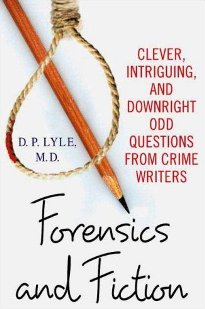
Forensics and Fiction: Clever, Intriguing, and Downright Odd Questions from Crime Writers by D.P Lyle

Book Description

How long can someone survive in a cold, damp cave without food or water? How was diphtheria treated in 1886? Can Botox kill? Can DNA be found on a knife years later? How are mummified corpses identified? How long does it take blood to clot when spilled on a tile floor? What happens in death from electrocution?

As a consultant to many novelists around the world and to the writers of such popular TV shows as Monk, Law & Order, House, and CSI: Miami, D. P. Lyle, M.D., has answered many cool, clever, and oddball questions over the years. Forensics and Fiction: Clever, Intriguing, and Downright Odd Questions from Crime Writers is a collection of the best of these questions. The answers are provided in a concise and entertaining fashion that will keep you wide awake so you can read just one more.

See following link for more details:

Forensics and Fiction: Clever, Intriguing, and Downright Odd Questions from Crime Writers

UK Visitors Click Here


Click here to add your own comments

Join in and write your own page! It's easy to do. How?
Simply click here to return to Forensic Q & A

Return to Using Alcohol To Remove Trace Evidence From A Crime Scene


footer for forensic science page